What Is Rafting?
What is rafting? Before explaining, it helps to look at the meaning of the word. Rafting comes from the English word “raft”, referring to a floating platform or inflatable boat.
Beyond the word's meaning, our main interest is rafting as a sport.
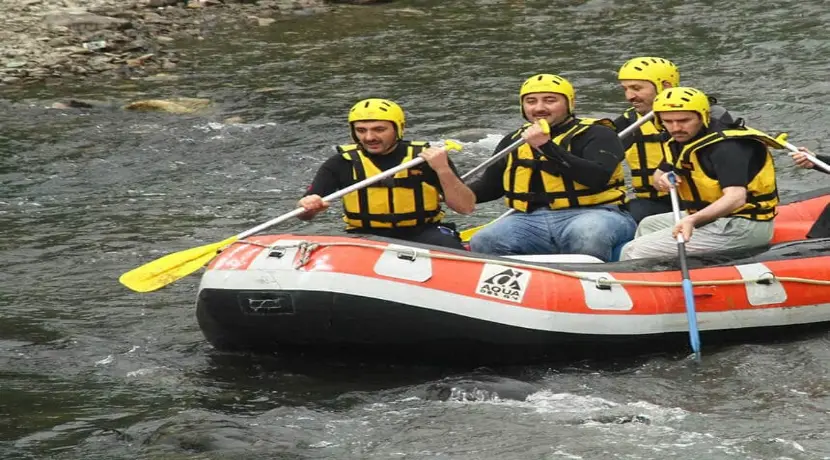
Raftingis an extreme sport on rivers with substantial flow and fast currents, navigating the water in a boat known as a raft.
Teams of 6–8 use paddles to move the raft and avoid obstacles.
To reach shore without capsizing, the team must work in harmony.
A key feature distinguishing rafting from other sports is that it does not require a long training period.
Compared with some other extreme sports, rafting has a relatively short introduction before participation.
In brief, getting started is not particularly difficult. Ten years ago, perhaps three in ten people in Turkey could have defined rafting correctly.
Interest grew with coverage in print and visual media. We are pleased that the article's estimate of recognition had risen to around 70%.
How Does Rafting Work?
How does rafting work? We hear this often. Rafts, paddles, helmets and life jackets are needed, and this equipment is expensive.
Visitors therefore buy a service from rafting operators rather than purchasing equipment themselves. There are no lengthy courses or exams for an introductory trip.
A 45-minute briefing before the activity prepares you to participate.
Watching the training video I prepared helps guests arrive better informed. You can find it on our rafting videos page online.
Rafting is popular with people interested in extreme sports. Getting started does not require special strength, skills or lengthy training.
Related Reading: What Will Happen to the Melen River?
Paddling matters, but coordination is more important than strength: paddle at the right place and time with your teammates. This makes rafting relatively easy to learn.
As with any sport, rules apply. Difficulty increases from Grade 1 through Grade 6.
Grade 1 covers lower-flow rivers with gentle currents and suits beginners, including younger participants.
As grades rise, flow volume and current strength increase. One Grade 3 river is the Melen rafting which provides a rafting challenge.
Melen offers enthusiasts a substantial challenge. During colder rafting periods, participants face both powerful currents and cold conditions.
Almost all rafting centres provide neoprene wetsuits like those used by divers to offer some protection from cold.
Adrenaline and continuous activity can also prevent or delay feeling cold.
Grade 6 describes the most challenging rivers, where high volume, fast currents, waterfalls and rocks challenge athletes.
Experience is required on rivers of this grade. Beginners are advised to avoid them.
The original article discusses experienced teams with a guide who knows the river considering Grade 6 attempts.
Greater difficulty can bring more adrenaline, but participants should be prepared to fall in, get wet, swallow water and feel cold.
The original article states an age range of 7–60 and excludes chronic conditions such as heart problems, high blood pressure and panic attacks.